
Is the Gaggia Classic Evo Pro worth it?


It scores 8.5 and takes our top value rating, the only machine above the mid tier that does both. The grinder is the part nobody budgets for.
VerdictThe Gaggia Classic Evo Pro is worth it if a grinder sits in the same budget and you expect to keep the machine for years. We score it 8.5, and it takes full marks for value, the only machine above the mid tier in our catalogue to manage that. Ease of use is where it charges you: a 2.
In this article
The Gaggia Classic Evo Pro is worth it for one kind of buyer and a poor purchase for everyone else. It scores 8.5 and takes full marks for value, then charges for that with a 2 for ease of use, the floor of our scale.
Two things complicate it, and neither is printed on the box. The machine sold in Britain left the factory at a different brew pressure from the one North American reviewers keep praising. And the cheapest route into a Classic runs through the generation with the boiler fault, testable in a minute on the worktop. Buy it if a grinder is already in the budget and you expect to still own the machine in a decade.
What the money actually buys
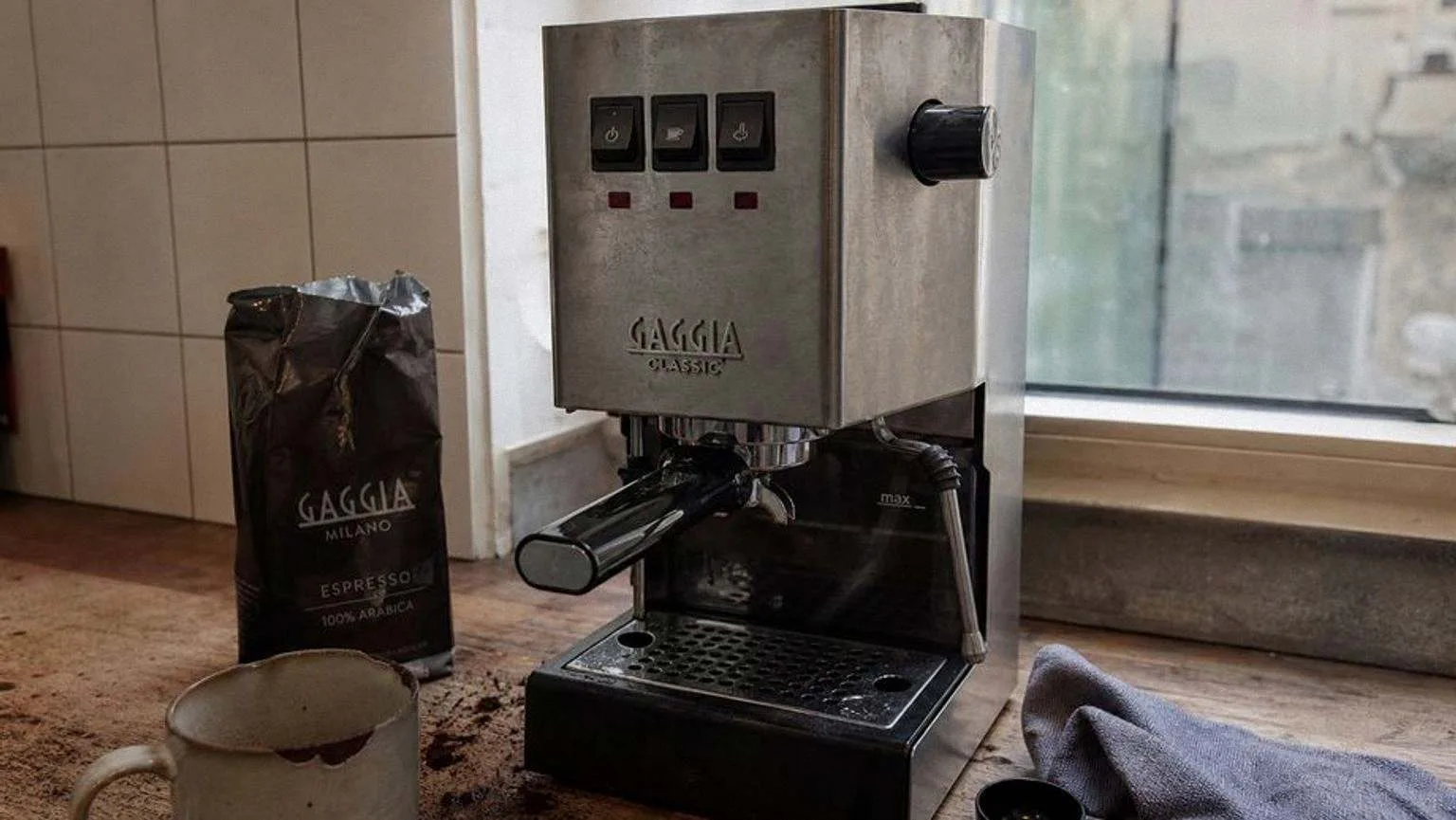
Three parts, none of them visible on a product photograph: a 58 mm commercial group, the solenoid valve behind it that dumps the pressure the second a shot stops, and a chassis that opens with ordinary tools. The group is the metal head your coffee basket locks into. Our serviceability rating for the Gaggia Classic Evo Pro is 95 on a hundred point scale, ahead of everything else we track, and that number carries most of the 8.5.
What the money does not buy is anything that makes the mornings easier. No temperature controller. No screen, no shot timer, no readout of any kind. Ease of use lands at 2, a rating only two other machines in our catalogue share, and versatility at 3.
A 2 is the floor of that scale rather than a middling grade, and nothing in the price is aimed at lifting it. Our full review of the machine covers what living with it is like. This page is only about whether the outlay makes sense.
A commercial 58 mm group and a real wand at a domestic price, with a brass boiler since the E24 revision. No PID, so you learn to time the warm-up — and almost everything on it can be replaced by hand.
- Build & durability
- Steam & milk
- Ease of use
- Value
- Versatility
The grinder is the other half of the bill
Budget for the machine alone and the answer to the worth-it question is no. A 58 mm group is a device for showing you what your grinder is doing, and there is no burr set anywhere inside this one. Put supermarket pre-ground through it and the group head has nothing to work with.
Count the grinder in, at something close to what the machine itself costs, and the arithmetic changes twice over. It gets dearer. It also stops competing with the all-in-one machines people cross-shop it against, because those hide a grinder inside the price and this one does not.
If that total is uncomfortable, look at the machines that grind their own beans before you look at cheaper espresso machines. The grinder decision comes first, or the machine decision is wasted.
Is it worth it if you never modify it?
Yes, though the 9 bar question lands differently here than it does in American coverage. Kev's UK review of the Classic Pro records that the 2023 machines went to North America with a 9 bar valve fitted while European stock kept the higher pressure one, and 9 bar is roughly what cafés brew at. The 15 bar figure on the box exists to force crema, the caramel foam on a shot, out of pre-ground coffee in a pressurised basket.
Unmodified, you still get the group, that valve and both basket types in the box. Plenty of owners stop there and stay content for years. The mod culture around this machine, a spring swap inside the valve and a temperature controller fitted afterwards, is real, inexpensive relative to the machine, and entirely optional.
It also splits owners further than any other question about it. Someone weighing the 2023 machine against the earlier one put the choice to the UK coffee forums and got both answers inside the same week: one reply walked them through the valve swap and the bottomless portafilter, the handled grip that carries the coffee basket with its spout cut away so you can watch the shot pour. Another told them to "buy a Bambino and enjoy something that works out of the box".
Fifteen replies settle nothing on their own, so read the positions and ignore the tally.
Three prosumer machines, one top value rating
Three machines in our catalogue sit in the prosumer tier, and only the Gaggia Classic Evo Pro takes full marks for value: the Rancilio Silvia rates 3, the Lelit Anna PL41TEM rates 4. Widen the frame to all 14 machines we track and four carry that top rating, but the other three are budget or mid tier buys that this one outscores by at least 0.7 points. Among the prosumer three it also holds the highest score, 8.5 against 8.3 and 8.2.
The similarity figure between the Gaggia and the Silvia is 78 per cent, and what the missing portion holds is steam. The Silvia rates 5 there against 4 here, and it is the machine to pay for if two jugs of milk go through it before school; what that steam rating buys is the whole of its own case. The Lelit arrives with its temperature controller already fitted and recovers the cost afterwards: its portafilter is 57 mm, an odd size British shops barely stock, so baskets and tampers get harder to replace. What that trade looks like day to day is its own argument.
The machines it gets weighed against
Step down and the comparison stops being about espresso at all. The De'Longhi Magnifica S ECAM22.110 also carries a 5 for value, on a score of 7.8, and it grinds, doses and brews behind a closed door with a 5 for ease of use against a 2 here. Same value rating, opposite arguments: one is good value because it lasts, the other because it saves you the work.
Which version to buy, and the one to check first
Buy the E24. Gaggia's own manual for the Classic E24 covers the brass boiler generation, and the same UK review puts that boiler at roughly 30 per cent more capacity than the aluminium one it replaced, though still only just over 100 ml. That aluminium boiler is where the trouble was. On the generation immediately before the E24 it was given a non-stick coating, some of those coatings did not adhere, and owners started finding flakes in the cup.
That version is the bargain, and it comes with homework. Stock of it is discounted wherever it remains, and the test takes a minute. Pull the tip off the steam wand, run water through, and if flakes appear it goes back for repair before it goes on your worktop.
A machine you can test in sixty seconds and return is a defensible gamble, provided you know which machine you are testing. Marketing names will not tell you, so find the RI code before you pay.
The part of the value case that only arrives later
Year one is the worst year to judge this purchase. Everything that justifies the rating happens after it: gaskets and shower screens that cost less than a single service call, a solenoid and a pump you can order and fit yourself, and a repair culture that has been writing about the same chassis since the Classic arrived in 1991. Twenty year old examples still change hands readily, the same review notes, which almost no domestic espresso machine manages.
That is what serviceability buys you once the warranty is over, and a machine with a resale floor costs less to own than its purchase price suggests.
One condition attaches to all of it, and in Britain it is not a small one. Limescale is what finishes these machines off, much of the south of England sits on hard water, and how often you descale has to follow your supply and not the calendar page. Skip it and the decade of ownership the whole value case rests on becomes about five years.
Frequently asked questions about the value case
Is the Gaggia Classic Evo Pro worth it?
Yes, on one condition: a grinder belongs in the same budget. The rating rests on a commercial 58 mm group and a chassis you can keep repairing, and nothing about it is convenient. If you want a good drink with no learning attached, put the money into a machine that steams the milk without you.
Do you need a grinder for it?
Yes, and it deserves the same weight of budget as the machine. Ground coffee loses most of what you paid for inside a week of the bag being opened, and there is nothing in this machine to compensate.
Is it worth it without the modifications?
It is. Everything that makes the machine unusual, the group, the valve and both basket types, comes in the box. The thing to know is that British and North American machines of the 2023 generation left the factory differently pressurised, so a review praising a stock machine may be praising a stock machine you cannot buy here. The spring swap that closes the gap is cheap and reversible.
Where is the Gaggia Classic Evo Pro made?
In Italy. Production of the Classic moved away after the 2009 takeover and came back with the 2019 Classic Pro, according to that UK review, and current machines are built on that chassis.
Which version of the Gaggia Classic should I buy?
The E24, the brass boiler generation, which is the one currently sold new. Below it sit the 2023 machines with the coated boiler, worth buying only at a discount and only if you run the wand test, and the earlier aluminium versions. Keep all three apart from the plain Classic Evo, a cheaper machine built on a different chassis.
How do I find the model number?
Look for an RI code rather than a marketing name. The brass boiler machine this page recommends is RI9380, whatever the listing calls it. The code is printed on the carton and stamped on the rating plate underneath the machine, so a binned box costs you nothing. Sellers who quote only the marketing name are how buyers end up with the wrong generation.
Which is better value, a De'Longhi or a Gaggia?
Both take our top value rating, and they earn it by different routes. The Magnifica S ECAM22.110 removes the work, which is why it takes a 5 for ease of use where this machine takes a 2, and its value comes from saving you an apprenticeship you may not want.
The Gaggia earns the same rating by outlasting what it competes with: a sealed brew group wears out as a unit, and a Gaggia wears out a gasket at a time. Which of those two savings you will actually collect is the real question.
Is it worth paying more for the Rancilio Silvia?
Only if milk is the bottleneck. On value the Silvia drops to 3 where the Gaggia holds 5, and the two share the same ease of use rating of 2, so the extra money is buying steam capacity and nothing else on the card. That is worth paying for in a household making cappuccinos in pairs, and wasted on one flat white a morning.


Sources we checked
Similar machines

Iona Brackley does the testing and the writing here: warm-up times from cold, brew temperature across three consecutive shots, milk in a small jug as well as a large one, and the noise a machine makes at seven in the morning. Where she has not had a machine in front of her, the article says so and stays with the specification and what owners consistently report.
Related articles
- ReviewLelit Anna PL41TEM review: is 57 mm worth a PID?
A factory PID at the entry to the prosumer tier, and a 57 mm group almost no third party kit fits. Which of those you notice depends on you.
- ReviewRancilio Silvia V6 review: 8.3, and the wand you buy it for
Top steam rating in the catalogue, on the highest weight we record: 90. The price is practice, and a listing that often shows a different machine.
- ReviewSage Barista Express BES875: worth it at 8.6/10?
One body that grinds, doses and brews, and the 8.6 that comes with it. The costs are a dose measured in seconds and a pause every time you steam.
- ReviewGaggia Classic Evo Pro review: 8.5/10 and a naming trap
A 58 mm commercial group and 5/5 build at a domestic price, with no PID and 2/5 for ease of use. And the E24 on the box is the same machine.